Organisation name: Clinical Research Excellence Foundation (formerly known as ClinverseEdge)

6 May, 2025
Author : Ria Vijay
Topic : How to Land a Job in Medical Writing: The Smartest Career Move in Clinical Research Today
What if you could build a career where your words help approve life-saving drugs?
Not by treating patients.
Not by working in a lab.
But by translating science into impact.
That’s medical writing.
And here’s the reality—while thousands chase traditional roles in clinical research, medical writing remains one of the most underrated, high-growth, and globally in-demand careers in healthcare.
If you’ve ever thought, “I like science… but I also enjoy writing” — this might just be your space.
What Does a Medical Writer Actually Do?
Let’s simplify it.
A medical writer takes complex scientific, clinical, or regulatory information and turns it into clear, structured, and accurate documents.
These documents are critical for:
- Drug approvals
- Clinical trial reporting
- Regulatory submissions
- Scientific publications
- Patient education
Without medical writers, research cannot move forward efficiently.
You are the bridge between science and communication.
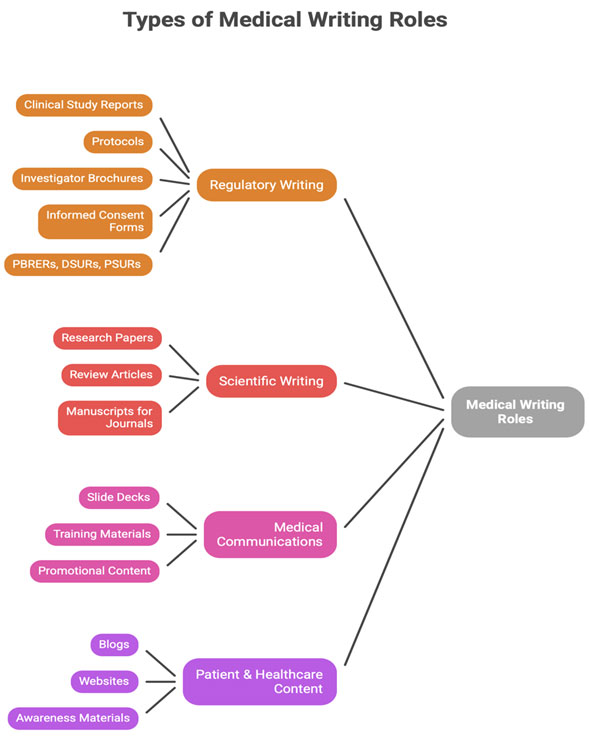
Types of Medical Writing Roles
Medical writing is not just “one job.” It’s a spectrum.
Who Can Become a Medical Writer?
Common backgrounds include:
- BSc / MSc (Life Sciences, Biotech, Microbiology, etc.)
- BPharm / MPharm
- MBBS / BDS / BHMS / BAMS / Nursing
👉 What matters more than your degree is your ability to understand science and explain it clearly.
Step-by-Step: How to Get a Job in Medical Writing
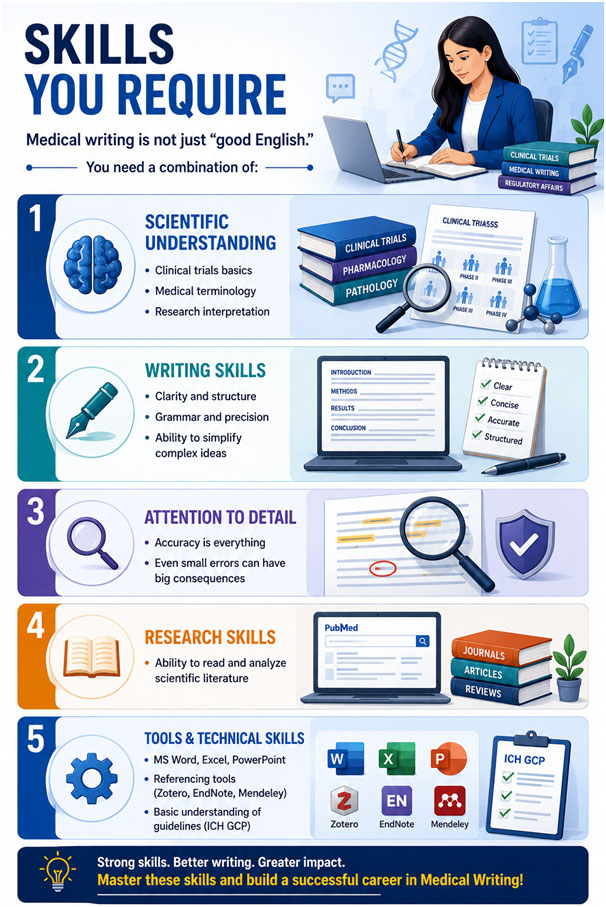
Step 1: Build Your Foundation
Learn:
- Clinical research basics
- Drug development process
- Types of medical documents
Step 2: Start Writing (Don’t Wait for a Job)
This is where most people fail—they keep learning but never practice.
Start with:
- Summarizing research articles
- Writing blogs on medical topics
- Creating sample documents
Step 3: Take a Structured Course (If Needed)
A good course can help you:
- Understand formats (CSR, protocol, etc.)
- Learn industry expectations
- Get mentorship
Step 4: Create a Strong Resume
Highlight:
- Writing samples
- Scientific knowledge
- Any internships or projects
Step 5: Apply Smartly (Not Randomly)
Target:
- Hospitals
- CROs
- Pharma companies
- Medical communication agencies
- Freelance platforms
👉 Customize your application—don’t send the same resume everywhere.
How to Crack Medical Writing Interviews
Most candidates lose here—not because they lack knowledge, but because they don’t prepare right.
What Interviewers Look For:
✔ Can you explain scientific concepts clearly?
✔ Can you structure information logically?
✔ Do you understand clinical research basics?
✔ Are you detail-oriented?
Common Interview Tasks:
- Write a short summary of a clinical study
- Edit or proofread a document
- Explain a medical concept in simple terms
How to Prepare:
- Practice writing daily
- Read sample medical documents
- Improve grammar and clarity
- Stay updated with research trends
How to Know If Medical Writing Is Right for You
Be honest with yourself.
This field is for you if:
✅ You enjoy writing and explaining
✅ You like working with documents and details
✅ You’re patient and focused
✅ You prefer structured, knowledge-based work
Final Thoughts: Your Words Can Shape Healthcare
In clinical research, some people collect data.
Some monitor trials.
Some design studies.
But medical writers?They give research a voice.
They make it understandable, usable and impactful.
If you have the ability to understand science and the courage to start writing…
You already have what it takes.
The only question is—will you use it?
Learn more at: www.clinicalresearchexcellencefoundation.com
 +91-8422800400
 +91-8422800400
 clinicalresearchexcellencefdn@gmail.com